

Other Classical Adlerians
THE CLASSICAL TRADITION
The figures presented here trained directly with Adler or within his immediate lineage. Their work carried the original depth and complexity of his vision forward - and it is from this transmission that our institute’s own training lineage descends.
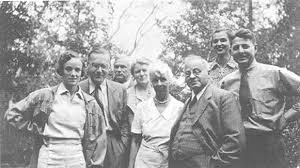
A full century ago, Adler had already left Freud's circle - dissatisfied with its rigid dogma and the authoritarian administration of the Wednesday Society - to assert a more social vision through his Individual Psychology. Even as fascism was rising across Europe, Adler's democratic ideas were spreading: Understanding Human Nature, drawn from his 1926 Vienna lectures, sold in the millions within years of its publication.
What followed was rupture. The Nazi rise to power scattered the Individual Psychology movement across Europe and beyond - some finding refuge in the United States and elsewhere, some lost to the camps. Their stories, and their indefatigable efforts to reestablish their work in new countries and communities, are documented in Clara Kenner's The Rent Heavens - a book this institute is currently engaged in translating.
The six figures presented below were part of that transmission. Each was directly connected to Adler or to his immediate circle. Their work and collaborations shaped Henry T. Stein - founder of the Alfred Adler Institute of Northwestern Washington and the principal architect of Classical Adlerian Depth Psychotherapy - whose own training lineage is the direct source of this institute's approach. It is through these connections, and through Stein's life's work, that the classical tradition reached us.

Lydia Sicher
Appointed to run Viennese child guidance clinics when Adler moved permanently to the US. Established Individual Psychology in Los Angeles upon fleeing Nazi-occupied Vienna, where she played a prominent role in training the next generation of Adlerians in North America.
1890 - 1962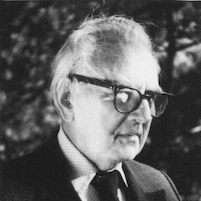
Anthony Bruck
Close associate of Adler in Vienna and organizer of Adler's initial tour of the US; colleague of Sophia de Vries and mentor of Henry Stein. Well remembered for his creative and innovative application of Adlerian constructs in time-limited therapeutic encounters and for his uniquely clarifying conceptual diagrams.
1901 - 1907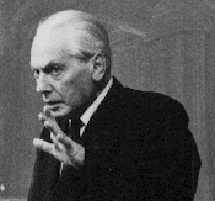
Alexander Müller
Early director of the Swiss Society of Individual Psychology; served as First Secretary of the International Association of Adlerian Psychology from 1954 to 1957. Author of You Shall be a Blessing, one of the early works exploring the spiritual dimensions of Individual Psychology.
1895 - 1968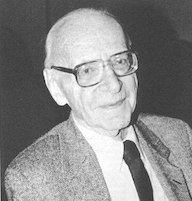
Kurt Adler
Second child of Alfred Adler and former Clinical Director of the Alfred Adler Institute of New York. A strong proponent and reviewer of the Classical Adlerian Translation Project.
1905 - 1977
Sophia DeVries
Inspired student of Adler and mentor of Henry Stein; her collaboration with Stein was instrumental in documenting the original material on which Classical Adlerian Depth Psychotherapy is founded, and in instigating the translation work that produced the Collected Clinical Works of Alfred Adler.
1901 - 1999The Transmission
Henry T. Stein
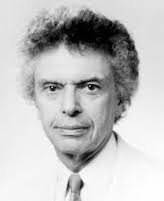
1932 - 2024
Henry Stein Co-founded the CADP movement and training program with Sophia de Vries. Formerly the senior training analyst and director of the Alfred Adler Institute of Northwestern Washington, he was a Classical Adlerian Depth Psychotherapist for over forty years. He studied with Sophia de Vries and Anthony Bruck who were both trained by Alfred Adler. For more than thirty years, he trained psychotherapists with an approach based on the original teachings and therapeutic style of Alfred Adler, as well as the clinical and philosophical writings of other Classical Adlerians. His own contributions to Classical Adlerian clinical practice included a comprehensive adaptation of the Socratic method, a thorough exposition of the twelve stages of psychotherapy, and an integration of Abraham Maslow's and Alfred Adler's visions of optimal human functioning. He wrote five books on CADP, and edited the 12-volume Collected Clinical Works of Alfred Adler. For more on Dr. Stein, see Jim Wolf's interviews of him.