The works presented here are organized by their proximity to the source. Adler's own writings come first, followed by those of his direct students and collaborators, and finally by contemporary works whose conclusions we believe are consonant with his vision.
Volume 1: The Neurotic Character. Fundamentals of Individual Psychology and PsychotherapyAlfred Adler · ISBN: 0-9715645-0-7A comprehensive edition, the first of its kind in English. Contains the prefaces of successive printings of Adler's magnum opus. References and commentaries for the names and works mentioned by Adler as they appear in the German critical edition are present.
Volume 2: Journal Articles 1898–1909. The Mind-Body Connection, Social Activism, and SexualityAlfred Adler · ISBN: 0-9715645-1-5Includes 16 articles as well as two extended works important to the development of Individual Psychology. Contains Adler's earliest professional work (1898) and his first book, published while a member of Freud's original circle (1907).
Volume 3: Journal Articles 1910–1913. Elaborating on the Basic Principles of Individual PsychologyAlfred Adler · ISBN: 0-9715645-3-124 longer articles and briefer reviews. Includes the constructs "psychological hermaphroditism" and "masculine protest" from which his ideas on striving for superiority and overcoming were developed.
Volume 4: Journal Articles 1914–1920. Expanding the Horizons of Child Guidance. Neurosis and PsychosisAlfred Adler · ISBN: 0-9715645-4-X24 entries make clear Adler's early social concern for child-guidance. His approach to neurosis and psychosis ranges broadly, from disorders recognized today to issues no longer considered pathological.
Volume 5: Journal Articles 1921–1926. Talent & Occupation; Crime & Revolution; Philosophy of LivingAlfred Adler · ISBN: 0-9715645-5-8Includes 43 articles published in a variety of journals, newspapers (e.g., The New York Times), marriage and child rearing manuals, and science-focused book series.
Volume 6: Journal Articles 1927–1931. Structure & Unity of Neurosis; Reason, Feeling & Emotion; Dream TheoryAlfred Adler · ISBN: 0-9715645-6-6Half of the 26 articles were originally published in professional Adlerian journals; others in Lancet, Esquire and Police Journal.
Volume 7: Journal Articles 1932–1937Alfred AdlerContains 28 chapters spanning seven years, completing the portion of CCWAA addressing Adler's journal publications. Stein describes this as the most mature expression of Adler's ideas on theory and practice.
Volume 8: Lectures to Physicians and Medical StudentsAlfred AdlerTwo sets of lectures given to medical students along with previously unpublished lectures. Includes pointed, sometimes humorous exposition of the "unconscious" as it differed between Freud and Adler.
Volume 9: Case HistoriesAlfred AdlerThree-part collection of case histories providing rich specific instances of Adler's use of the stochastic, conjecturing method: Problems of Neurosis, The Case of Mrs. A., The Case of Miss R.
Volume 10: The Problem Child · The Pattern of LifeAlfred AdlerIncludes The Problem Child and The Pattern of Life. Contains 23 specific cases with chapters including "The Alleged Crisis of Puberty," "How I Talk to Parents," and "The Task of Kindergarten."
Volume 11: Education and Child Guidance 1924–1927Alfred AdlerCombines Adler's works in education between 1924–1927. Adler attracted more than six hundred Viennese teachers to his course and by 1927 the city of Vienna would hire only teachers who had graduated from Adler's Pedagogical Institute.
Volume 12: The General System of Individual PsychologyAlfred AdlerA fitting conclusion to the series — a previously unpublished manuscript of thirteen lectures presented in English. Fast-paced, extremely readable, and an insightful summary of Individual Psychology.
Standalone Works by Adler
Social Interest: A Challenge to MankindAlfred AdlerAn individual's level of social interest is key to success in solving the problems of life. Social Interest refers to how individuals view themselves in relation to the external world. It should involve a strong sense of community and fellowship. The book sheds light on principles such as inferiority and superiority complexes, childhood memories, pampered children, the nature of neurosis and the significance of dreams.Download e-book
The Science of LivingAlfred AdlerAn eminently readable introduction to Adlerian psychology. Adler introduces his central concept of the life style — the unique method which each of us actively employs to create his or her own destiny.
What Life Could Mean to YouAlfred AdlerBrings Adler's conclusions to a popular audience. Covers adolescence, feelings of superiority and inferiority, the importance of cooperation, work, friendship, love and marriage.Download e-book
Understanding Human NatureAlfred AdlerAdler believed that the work of understanding should not be the preserve of psychologists alone. This approach to psychology was unusually democratic for psychoanalytic circles.Download e-book
Superiority and Social InterestAlfred Adler · Heinz and Rowena Ansbacher, EditorsTwenty-one papers reflecting the individual's striving toward superiority and the healthy person's need to connect that striving with social interest — concern for the common good. The selections include a long essay on religion and individual psychology and Adler's account of his differences with Freud, plus a biographical essay by his earliest co-worker Carl Furtmuller.
The Individual Psychology of Alfred AdlerHeinz and Rowena Ansbacher, EditorsWhen we hear such expressions as feelings of inferiority and insecurity, striving for self-enhancement and power — we are meeting ideas in which Alfred Adler was the pioneer from 1907 until his death in 1937. The purpose of the present volume is to make Adler's contributions available in a systematic and authentic form. Because every word in the main body of the work is Adler's, the outcome is the equivalent of a textbook by Adler on Individual Psychology.Download e-book
Cooperation Between the SexesAlfred Adler · Heinz and Rowena Ansbacher, EditorsAdler's emphasis on the equality of the sexes and his concept of the "masculine protest" provides the basis of present-day considerations of sexuality, love and marriage. A modern work by a writer whom Gordon Allport called "one of the wisest psychologists of this century." These writings reflect Adler's theoretical dissatisfaction with the deterministic beliefs of Sigmund Freud — and having presented them, he precipitated one of the most dramatic schisms in psychoanalytic psychology.
CADP Literature
Offerings in this section include many of the books used in distance training of Classical Adlerian Depth Psychotherapists - the works of Henry Stein, Sophia de Vries and other Classical Adlerians devoted to making clear the style of therapy that accompanies Adler's humane therapeutic theory.
Theory & Practice: A Socratic Approach to Democratic LivingHenry T. Stein · Volume IFully describes the stages and tasks of Classical Adlerian Depth Psychotherapy, with comprehensive expositions of strategies for cognitive, affective, and behavioral change. Includes a therapeutic adaptation of the Socratic method; guided and eidetic imagery; and role-playing techniques for providing missing developmental experiences.
Creative Case Analysis: Uncovering the Fictional Final Goal & the Counter-Fiction That Hides ItHenry T. Stein · Volume IIPart One includes a comprehensive guide to interpreting psychological movement. Part Two covers Life Style Analysis including feeling tone theory, interpreting Genograms and earliest recollections. Phases of the creative process; brain dominance; parallels to qualitative analysis; gathering, organizing, expanding and analyzing information; condensing and synthesizing; and formulating a treatment plan. Part Three offers seven case illustrations.
Demonstrations of Therapeutic TechniquesHenry T. Stein · Volume IIIIncludes role-plays with students-as-clients and work with real clients, demonstrating the Socratic Method, Missing Developmental Experience, Eidetic Imagery, and role-playing techniques. Part Two consists of role-played demonstrations with a student playing a client, giving the flavor of the different stages of CADP — compressed into a "twelve-act play." Part Three provides a transcription of Dr. Stein's work with a real client.
Child & Family TherapyHenry T. Stein · Volume IVSophia de Vries' teachings about therapy with children provide a rare source of Adlerian wisdom. Transcriptions of three of her lectures on Adlerian theory and child development are included. Also includes sections of the unpublished manuscripts of Alexander Mueller's work with children and their families. Stein's contribution is the addition of practical details about the diagnostic and therapeutic process, largely deduced from watching Sophia work and discussing cases with her for more than twenty years.
A Clinician's Guide to the Collected Clinical Works of Alfred AdlerHenry T. SteinServes as bookends for the CCWAA series — providing both an introduction-overview and a conclusion-summary. A stand-alone volume with clear and concise summaries of every article in the series and every chapter in the multivolume books.
The Collected Works of Lydia Sicher: An Adlerian PerspectiveLydia Sicher · Edited by Adele K. DavidsonDr. Lydia Sicher united a brilliant brain with a dauntless spirit — exactly the kind of human being who most appealed to Adler, who trained her and put her in charge of all Adlerian activities in Vienna after his work took him abroad in the late 1920s.
Individual PsychologyErwin Wexberg and Beran WolfeDr. Erwin Wexberg, perhaps the most brilliant and constructive co-worker of Adler in Vienna, presents a concise encyclopedia of human understanding and a guide to the technique of the most effective system of psychotherapy and pedagogy devised in modern times. Its rational approach to the problems of mental life, its scientific simplicity, and its vibrant humanism must appeal to all those who would understand and influence human behavior. The first book to show how far Adler has gone beyond his first announcement of the theory of organ inferiority and its psychic compensation.Download e-book →
Classical Adlerian Brief Therapy: The Innovative Techniques of Anthony BruckAnthony Bruck · Edited by Henry T. SteinBruck achieved remarkably quick therapeutic results with individuals from many countries, often in unusual circumstances. Trained by Alfred Adler, he mastered Adler's theory, philosophy, and style of treatment. This volume offers his simple, appealing diagrams that illustrate Adler's theory; fascinating case illustrations; and strategies for helping clients achieve practical improvements when therapeutic time is quite limited. Anthony's love of language and graphics adds a dramatic, clarifying dimension to the client-therapist dialogue.Download e-book →
You Shall Be A BlessingAlexander Müller"You Shall Be A Blessing: Main Traits of A Religious Humanism" forges three sources of personal meaning — philosophy, spirituality, and Adlerian Psychology — into an inspiring, profoundly stimulating view of the human condition.
Corroborating Literature
We include here non-Adlerian books and authors we have found especially helpful in applying Adler's insights within the course of therapy. Just as we therapists creatively employ our personalities in co-thinking with our clients, so this literature, rich in context, spirit and focus, has assisted us in applying Adler's insights by effectively humane means.
Daniel J. SiegelDaniel J. Siegel, M.D.An internationally acclaimed author, award-winning educator, and child psychiatrist. Clinical professor of psychiatry at the UCLA School of Medicine and co-director of the Mindful Awareness Research Center. Executive Director of the Mindsight Institute, devoted to promoting insight, compassion, and empathy in individuals, families, institutions and communities. His books include "The Yes Brain," "Brainstorm," "Mindsight," "The Developing Mind," "The Mindful Brain," "The Mindful Therapist," "Parenting From the Inside Out," and "The Whole-Brain Child." Founding Editor of the Norton Professional Series on Interpersonal Neurobiology.More by Daniel Siegel →
Alice MillerAlice Miller (1923–2010)An influential and controversial figure in psychoanalysis and psychotherapy. Her first book, The Drama of the Gifted Child (1979), sold millions worldwide. She described how a child's need for love was often exploited by parents to meet their own unmet needs. Unable to express their true feelings, these children grow up unhappy and depressed, out of touch with their real selves. A passionate supporter of children's rights, she fought to abolish the smacking of children, which she saw as an abuse of power. Parents and psychotherapists owe Miller a huge debt — she reminded us to question whether we "know best" and never to humiliate those who depend on us.List of Publications →
Bruce PerryBruce D. Perry, M.D., Ph.D.Senior Fellow of The ChildTrauma Academy and adjunct Professor at Northwestern University. Author of The Boy Who Was Raised As A Dog and Born For Love: Why Empathy is Essential and Endangered. His clinical research has focused on integrating concepts of developmental neuroscience and child development into clinical practices, resulting in the Neurosequential Model of Therapeutics (NMT). The ChildTrauma Academy works with child protective services, mental health, public education and juvenile justice to promote positive change for high risk children.More by Bruce Perry →
The Behavior of Young Children of the Same FamilyBlanche C. WeillBlanche C. Weill was a collaborator of Lydia Sicher in the Los Angeles area. Writing from an Adlerian perspective, she helps parents and professionals understand the uniqueness of children within the same family. Through detailed case studies she helps the reader understand the child's inner workings — prototype and lifestyle — as they develop their limited understanding of their world and how they fit into it.
Your Inner Child of the PastW. Hugh MissildineThe concepts of inner child of the past, being a parent to oneself, and mutual respect helped patients as soon as they were applied. Reading this book may illuminate your problems in such a way as to make it possible to apply yourself to the real cause of your loneliness, anxiety and exhausting conflicts.
The Lure of SuperiorityWaylan F. VaughnTaking Adler's psychology as its basis, this study of normal personality analyzes the self-regarding sentiment and how persons with marked deficiencies are susceptible to the will-to-power by reason of various kinds of inferiority. Compensation is worked out in detail to demonstrate how certain purposes are rendered possible. The consciousness of inferiority arouses the mighty forces of the instinctive and emotional life and sets conditions that favor the attainment of distinction in art, religion, learning, and other paths to power.
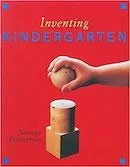
Inventing KindergartenNorman BrostermanThe first comprehensive book about the original kindergarten — a revolutionary educational program invented in the 1830s by Friedrich Froebel — and how it became a familiar institution throughout the world by the end of the nineteenth century. Froebel's gifts — building blocks, parquetry tiles, origami papers, modeling clay, and other design projects — became wildly popular in the nineteenth century. In a section devoted to the origin of abstract art and modern architecture, Brosterman shows how this educational program may have influenced artists who attended kindergarten including Braque, Mondrian, Klee, Kandinsky, Frank Lloyd Wright, and Le Corbusier.
Holism and EvolutionJan Christiaan SmutsA philosophical work whose holistic vision resonates deeply with Adler's own understanding of the person as a unified whole. The old concepts and formulas are no longer adequate — the old bottles will no longer hold the new wine. Holism and the holistic point of view will prove important in their bearings on the main problems of science, philosophy, ethics, art and allied subjects. This little book indicates the lines along which my own mind has travelled in the search for new and more satisfactory concepts.
The Importance of Feeling InferiorMarie Beynon RayLucidly and interestingly written, with many convincing examples of the stimulation to achievement sparked by feelings of inferiority — such outstanding cases as those of Lincoln and Alexander the Great. Its many case histories of less-known individuals can enormously assist the normal person to understand oneself and others and to order one's life more happily. (From the foreword by Manfred J. Sakel, M.D.)
The Wisdom of InsecurityAlan W. WattsDrawing from Eastern philosophy and religion, Alan Watts shows that it is only by acknowledging what we do not — and cannot — know that we can learn anything truly worth knowing. In order to lead a fulfilling life, we must embrace the present and live fully in the now. Featuring an Introduction by Deepak Chopra.
The Dominant Sex: A Study in the Sociology of Sex DifferentiationMathilde and Mathius VaertingThe fundamental theory of this book is that what we call "masculine" qualities today are merely the qualities of a dominant sex, and what we call "feminine" qualities are merely the qualities of a subordinate sex. The authors have proved that much of what we lightly class as "masculinity" and "femininity" is not congenital, but is reacquired from generation to generation. Only when full allowance has been made for the effects of sex dominance will it be possible to ascertain the residue of masculine and feminine character traits which are indisputably congenital.
The Biology of DesireMarc LewisCognitive neuroscientist and former addict Marc Lewis makes a convincing case that addiction is not a disease, and shows why the disease model has become an obstacle to healing. Lewis reveals addiction as an unintended consequence of the brain doing what it's supposed to do — seek pleasure and relief — in a world that's not cooperating. He shows how treatment can be retooled to achieve lasting recovery. Enlightening and optimistic reading for anyone who has wrestled with addiction either personally or professionally.