

Alfred Adler Institute in Suisse Romande
What is Classical Adlerian Depth Psychotherapy?
A coherent, humane framework for clinical practice - rooted in Alfred Adler's original vision of human nature.
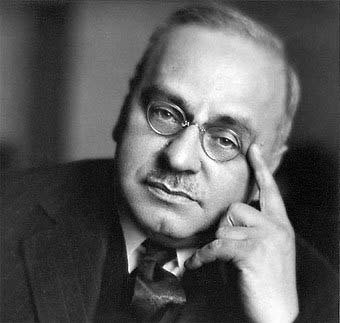
ALFRED ADLER
The Man and the Tradition
Alfred Adler pioneered a vision of psychology that was at once scientifically rigorous and profoundly humane. Among the first generation of depth psychologists, he broke from Freud to develop a radically different account of the human being — purposive, social, and forward-directed rather than driven by unconscious conflict.
The classical tradition preserves the full depth of that original vision — through the writings of those Adler taught directly, and through a lineage of scholarship and clinical practice that connects unbroken to his original work.
Depth training in counselling and psychotherapy is not as common in Canada and the United States as it is in Europe. The depth focus of this mode of Adlerian therapy is more aligned with the psychodynamic approaches of its historical roots, and can be differentiated from mainstream Adlerian practice in North America, which is cognitive-based and strongly systematized. Adlerian Depth Psychotherapy, by contrast, advocates creative client-clinician collaboration grounded in the individuality of the client. We emphasize Adler's original integration of cognitive structures, feeling tone, and behavioral interactions.
Yet we also distinguish ourselves from the typically psychodynamic reading of Adler's theory that has continued in Europe. The Adlerian training institutes here in Europe - in Berlin, Milan, as well as in Vilnius, Lithuania - consider themselves within the contemporary psychoanalytic movement. Because AAIsr's depth-orientation is holistic, we understand "inner conflicts" not as dualistic struggles between id and ego, but as the incongruity between an individual's unique and unitary Life Style and the demands of social adjustment.
Our emphasis is to help the individual clinician grasp Adler's conceptualization of the human psyche - or soul: for Adler, the principle of movement in a life. His understanding of unconscious dynamics is quite distinct from Freud's or Jung's, and our aim is to preserve that distinction and bring it into the clinical encounter.
Where We Stand in a Longer History
THE DEPTH TRADITION
THE CLASSICAL TRADITION
Recovering the Original Depth
Alfred Adler's theory is richer, more philosophically complex, and more clinically sophisticated than most contemporary training programs suggest. The version of Adler that entered North American psychology captured important practical applications - particularly in education and parenting - and those contributions remain genuinely valuable. But something is too often lost in that transmission: the depth, the phenomenological complexity, the original integration of cognitive, affective, and somatic dimensions that Adler himself described. This tradition, rooted in Adler’s original theoretical formulation, is what we term classical.
We work from the original sources. We read Adler's own texts in translation. We draw on the writings of those he taught directly. We preserve a training lineage that connects to that classical tradition. This is not a critique of mainstream Adlerian practice - it is an invitation to go further.
Adlerian Depth Psychotherapy in Practice
CLINICAL PRACTICE
Adlerian Depth Psychotherapy begins with a view of the person as a coherent, goal-directed unity - thinking, feeling, and behaving as coordinated expressions of a single Life Style. This is not a technique or a protocol. It is an orientation: a lens through which we understand the intentions and meanings that organize a client's experience.
In practice, this means the clinician does not assume the stance of expert interpreter. The therapeutic relationship is collaborative - a shared process of observation and reflection in which client and clinician together attend to the patterns that give shape to the client's characteristic way of moving through the world.
As awareness of unconscious patterns deepens, clients gain a stronger sense of agency and personal responsibility. Growth, in this tradition, does not require blame — of oneself or of others. It moves instead toward an enlarged capacity for meaningful contribution to the lives of those around them.
More from the Institute
NEXT STEPS